Handle With Care: Why Cheap Door Hardware Is a False Economy in 2026
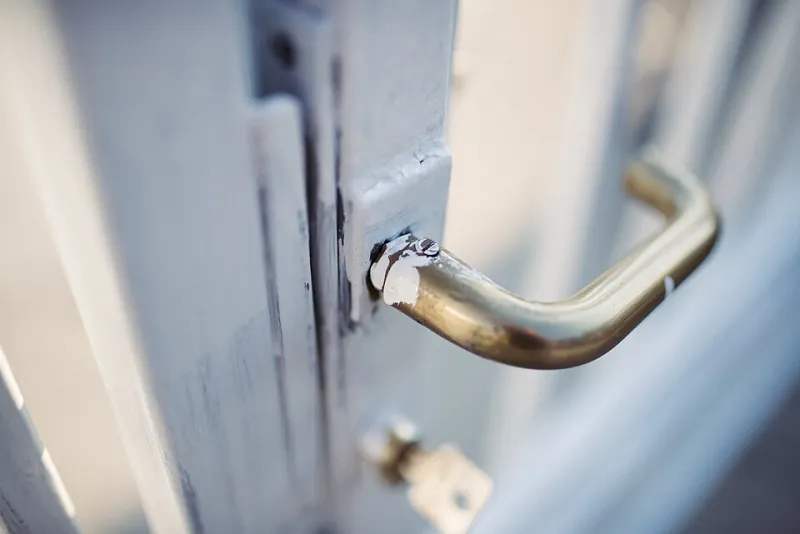
Photo: Shixart1985, CC BY 2.0, via Wikimedia Commons
We spend months choosing doors, cabinets and front entrances, then ruin the effect with a handful of cheap screws and a handle that wobbles before the first Christmas. Door hardware is the bit you touch every single day. It is also the bit most renovators treat as an afterthought. That is a mistake. In 2026, with door prices where they are, cheap ironmongery is one of the fastest ways to make an expensive renovation feel tired.
The £2 Handle Problem
A cheap handle is not just a visual weak point. It is a moving part. The finish flakes, the screws are soft, the spindle develops play and the fixing bolts strip the first time someone leans on it. On a cabinet, that means a handle that spins or pulls loose. On a front door, it means a lock that feels vague and a handle that has seen better days within a year.
Worse, cheap hardware often fails at the point of installation. The screw heads chew up, the threads are poorly cut and the tolerances are sloppy. Your joiner spends an extra hour faffing, and you pay for that labour. The handle was cheap. The fit was not.
Finish Durability: Read The Small Print
Finish is where cheap hardware gives itself away. Matt black looks brilliant in photos, but a cheap lacquer over brass or steel can chip and flake around the screw fixings. Brushed nickel can look patchy if the brushing is inconsistent. Polished chrome hides scratches well but shows fingerprints. Satin brass is lovely but can tarnish unevenly if it is a thin plating rather than a solid or PVD finish.
Ask what the finish actually is. PVD coatings are generally more durable than painted or lacquered finishes. Solid brass can be re-polished or left to patinate. Cheap plating will eventually reveal the base metal, especially in a bathroom or near the coast where salt and moisture do their thing.
If you are fitting hardware across a whole house, buy one sample first. Fit it to a spare door or cabinet for a few weeks. Open it with wet hands. Clean it. See how it looks after a month. That is a much better test than a two-minute feel in a showroom.
Hinges: The Unsexy Hero
Hinges are boring, which is exactly why people buy bad ones. A heavy oak door hanging on cheap hinges will sag. A cabinet door on a weak hinge will drop and catch. Soft-close hinges are now standard in decent kitchens, but the mechanism quality varies enormously. Cheap soft-close hinges fail quietly and then annoyingly.
Fire doors are the serious end of this. A fire door is a system, not just a slab. It needs the right hinges, intumescent strips, seals and hardware. If you are replacing a flat entrance door or a door onto a garage, check that the hinges are suitable for fire doors and are CE or UKCA marked where required. Do not let a cheap hinge undermine a fire-rated door. It is not worth it.
For internal doors, spend a little more on hinges that are rated for the door weight. For cabinets, choose a reputable hinge brand with adjustable, clip-on mechanisms. Hinges are relatively cheap compared with doors. Upgrading them is one of the best-value moves in the whole renovation.
Locks: Insurance, Standards And Not Being Cheap
Locks are where cheap hardware becomes a genuine risk. Your insurer may require specific standards, especially on a front door. In the UK, you will see references to BS 3621 for mortice deadlocks, BS 8621 for nightlatches, BS 10621 for multipoint locks and TS 007 for cylinders. PAS 24 is also used for doorsets. If you are unsure, check your policy and ask your insurer before you buy.
A good euro cylinder should be anti-snap, anti-bump and anti-pick. Cheap cylinders can be snapped surprisingly easily. A shiny handle set with a rubbish cylinder is security theatre. If your front door is a big investment, fit a decent cylinder and a lock that meets your insurer's requirements. Keep the receipts. Some insurers ask for proof of specification.
Do not buy a random lock online and hope for the best. Buy from a reputable supplier, check the markings and get a qualified joiner or locksmith to fit it. A good lock badly fitted is still a bad lock.
A Spend-Here, Save-There Framework
Spend here: front door locks and cylinders, fire-rated hinges, heavy-use cabinet handles, door closers on doors that get a lot of traffic and anything that secures the house. These are the parts that cost money to replace and even more to fix after they fail.
Save here: low-touch decorative knobs in a guest room, cupboard latches that barely get used and spare keys. You can also save by choosing a mid-range reputable brand rather than a designer name. The finish and mechanism matter more than the logo on the packaging.
A sensible rule: if you are spending four figures on a front door, do not fit a £15 cylinder. If you are spending good money on a kitchen, do not let the handles be the cheapest thing in the room. Hardware is a small percentage of the budget and a large percentage of the daily experience.
The UK Standards Cheat Sheet
You do not need to memorise every code, but you should recognise the important ones. BS 3621, BS 8621 and BS 10621 are common insurance-related lock standards. TS 007 relates to cylinder security. PAS 24 is used for enhanced security doorsets. Fire doors should be fitted as a certified system, with the right hinges, seals and hardware. CE and UKCA marking may apply to construction products. If a seller cannot explain what a product is certified for, walk away.
Where Cheap Hardware Costs Twice
It costs twice because you pay for the cheap part, then you pay a joiner to replace it. It costs twice because a failed lock can mean an insurance claim, a locksmith call-out or a damaged door. It costs twice because a flaking handle makes a new kitchen look older than the one you replaced. And it costs twice because hardware is the interface between you and the building. It is the bit you feel.
The Bottom Line
Door furniture is not glamorous, but it is one of the highest-leverage purchases in a renovation. Buy decent hinges, sensible locks and handles that feel solid in the hand. Then save on the stuff nobody touches. In 2026, the smart money is not on the most expensive handle in the showroom. It is on the hardware that still feels right after five years of daily use.