The Finish Does the Heavy Lifting: Paint Choices That Cope With Real Life
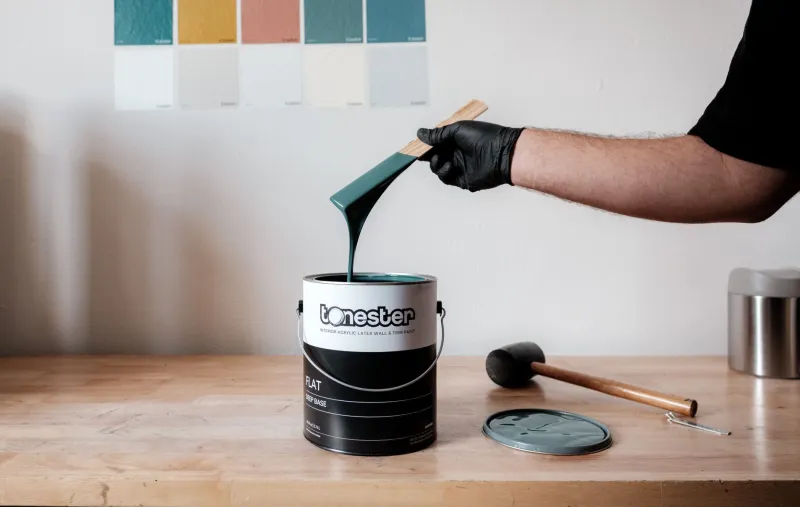
Most of us walk into a paint shop with a colour in mind. We stand under the strip lights, hold a card against the wall, umm and ahh, then grab a tin of whatever is on offer. The finish is often an afterthought — a quick glance at the label before heading to the till. That is backwards. In a real UK home, sheen does at least as much work as shade. It changes how light bounces around a room, how obvious every lump and brush mark becomes, and how well the wall survives a hallway scuff or a kitchen splash.
Why sheen changes everything
Paint finish is basically a measure of how much light the dried film reflects. A flat matt swallows light and softens imperfections. A gloss throws light back at you and highlights every ripple. Neither is good or bad — they are tools. The trick is matching the tool to the room, the surface and the amount of abuse it will take.
This matters more in older UK housing stock than in a showroom. Plaster can be uneven, corners are rarely true, and a south-facing bay window will expose every flaw you thought you had hidden. A durable matt on a wonky wall can look calm and forgiving. The same wall in a high-sheen satin can look like a funhouse mirror.
The four finishes in plain English
Matt is the popular choice for walls. It hides filler, patches and minor lumps, and gives that soft, modern look. Standard matt is not very scrubbable, though. It marks if you look at it too aggressively. Durable matt is the better bet for halls and family rooms — it keeps most of the flat look but has a tougher film.
Eggshell sits in the middle. It has a gentle sheen, usually around 10–20% depending on the brand, and it is tough enough for woodwork and busy walls. It is the sensible grown-up of the paint world.
Satin is brighter and more wipeable. It is great for kitchen cupboards, skirting and bathroom walls, but it can look a bit shiny on large flat walls. In a period property, satin on every surface can feel wrong. Use it where practicality wins.
Gloss is the hard-wearing, high-shine option. It is brilliant for front doors and radiators, and it is easy to wipe clean. It is also unforgiving. If the woodwork underneath is not well prepped, gloss will tell everyone about it.
Room-by-room, without the guesswork
In a hallway or staircase, think traffic first. Durable matt on the walls and eggshell on the woodwork is a solid combination. If the walls take a daily battering from bags and bikes, a low-sheen eggshell is easier to wipe down. Avoid standard matt here unless you enjoy touching up.
For a living room, matt walls are usually the right call. They let the light sit softly and make the room feel bigger at night. Use eggshell or satin on the woodwork so it can be cleaned without dulling. If you have young children or a dog that treats the sofa as a trampoline, a durable matt is the practical compromise.
In a kitchen, avoid ordinary matt on the walls. Eggshell or a kitchen-specific finish is better for splashes and steam. Cupboards can take eggshell or satin, but check the label for hardness and recoat times. If you are painting cabinet doors, a proper priming system matters more than the brand name on the tin.
In a bathroom, moisture-resistant paint is not a marketing gimmick. Standard matt can bloom and flake in a steamy room. Use a bathroom eggshell or satin on the walls, and make sure the extractor actually works. Paint cannot fix bad ventilation.
For bedrooms, standard matt is fine. It is soft, cheap to cover a large area and easy to live with. Use eggshell on the woodwork if you want a slightly more practical finish. Ceilings are usually best in a flat matt or contract matt, unless the room is very steamy.
What to check on the tin
Ignore the colour card for a minute and read the small print. Look for the coverage figure in square metres per litre. Cheap paint often needs three coats, which wipes out the saving. Check whether the tin says scrubbable or washable — they are not the same thing. Scrubbable means you can use a bit of elbow grease; washable means a gentle wipe.
Look at the sheen level if it is stated. Some brands call a finish matt when it is really a low sheen, and that can look very different on a large wall. Check the recoat time. If you are painting a hallway over a weekend, a paint that needs 16 hours between coats will slow you down.
Also check the base. Some tins are ready-mixed, some need tinting, and some are only available in certain bases for deeper colours. If you are buying several tins, note the batch numbers. A slight batch difference is more obvious in strong colours and in satin or gloss finishes.
Finally, check what primer the manufacturer recommends. Going straight onto bare plaster, old gloss or MDF without the right primer is one of the most common reasons a finish fails. The paint is only half the system.
The lighting test
Before you commit, paint a sample board and move it around the room at different times of day. A colour that looks warm and chalky at noon can look grey and flat under a warm bulb at 7pm. Sheen makes this worse. A satin patch can look almost white in one corner and murky in another.
Do not judge a finish from a tiny dab on the wall. Paint an A2 piece of lining paper, let it dry properly, then hold it against each wall. It sounds fussy. It is cheaper than repainting a whole room because the eggshell turned out to be shinier than you expected.
The short version
Pick the finish for the job, then pick the colour. Matt for calm walls and low-traffic rooms, durable matt for halls and family spaces, eggshell for woodwork and busy walls, satin for kitchens and bathrooms, gloss for doors and radiators where you want hard-wearing shine. Read the tin for coverage, scrub rating and recoat time. Then test the finish in the actual light. That is the boring advice that makes a painted room look finished rather than merely painted.