Shade Before Skirting: Buying Blinds for a Room That Isn’t Finished Yet
Blinds have a habit of becoming the last thing on the list. By the time the plaster is dry and the kettle is back on, everyone is desperate to move in, and someone orders a made-to-measure roller blind from a laptop balanced on a paint tin. That is when the fun starts. The window has gained a tiled reveal, the skirting has appeared, the curtain track is in a different place, and the blind that looked perfect on screen is now 20mm too wide for the recess.
The sensible approach is not to buy blinds at the very end. It is to plan them early, measure late, and understand exactly what your finished opening will look like before you commit. In a renovation, the window is not simply the hole in the wall. It is the hole plus plaster, tiles, window board, skirting, handles, vents and whatever else the trades have decided to add.
Measure the room you will live in, not the building site
A bare window reveal is a useful starting point, but it is not a buying measurement. Plaster adds thickness. Tiles and adhesive reduce the recess. A new window board changes the depth and can affect how a blind drops. Skirting may not matter for an inside-recess blind, but it matters a great deal for an outside-recess fitting that needs to sit flat against the wall.
The practical rule is to measure the finished opening, or as close to it as you can reasonably get. If tiling is still to come, either wait until the tiles are on or deduct the tile and adhesive thickness from your recess measurements. If the window board has not been fitted, decide its thickness and overhang now. If the walls are being skimmed, do not assume the plasterer will add precisely the amount you imagined. Renovation dimensions have a sense of humour.
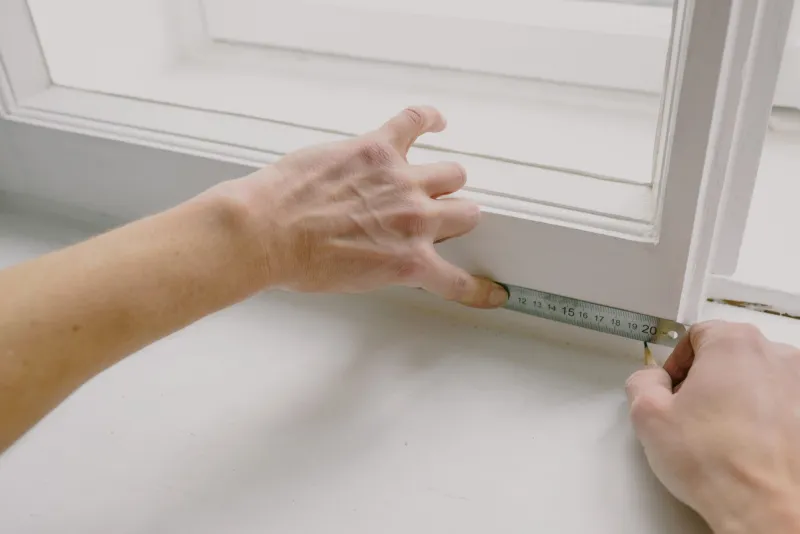
Use a metal tape measure rather than a fabric one. For a recess fitting, measure the width at the top, middle and bottom of the reveal, and the drop at the left, centre and right. Then use the smallest width and smallest drop. That is not being pessimistic; it is being realistic about old walls, new plaster and the fact that very few openings are perfectly square.
Recess or exact: choose the fitting before the numbers
Most blind buying comes down to two basic approaches. A recess blind sits inside the window reveal. It looks neat, keeps the wall clear and suits bathrooms and small rooms. But it needs a reasonably square reveal, enough depth for the brackets and clearance for the blind itself. Tiles can eat into that clearance quickly.
An exact blind, sometimes called an outside-recess fitting, fixes to the wall or window frame and overlaps the opening. It is more forgiving of uneven plaster and wonky reveals, and it usually gives better light control because there are fewer gaps at the edges. The trade-off is that it projects into the room, can clash with curtain tracks, radiators or window handles, and needs a sensible overlap on each side. As a rough guide, allow at least 50mm of overlap on each side and check the drop carefully, especially if you want blackout performance.
Bay windows need their own conversation. A single wide roller blind stretched across the angles is rarely the answer. Measure each face separately and decide whether you want separate blinds, a shaped headrail system or a mix of blinds and curtains. Victorian and Edwardian bays are charming, but they are not known for their right angles.
The order of operations that saves a second order
Start by choosing the style and ordering samples early. Fabric colour, blackout lining, wipe-clean finishes and headrail colour are easier to judge in daylight than on a phone screen. Then leave the final measuring until the messy work is done. Plaster should be finished, tiling should be complete, and window boards should be fitted or at least decided.
Made-to-measure blinds often take two to six weeks, and busy periods can push that out. Do not leave the order until the day the carpet arrives. On the other hand, do not measure before the plasterer has finished and then wonder why the brackets do not sit flush. The sweet spot is after the wet trades and before the final decoration, when you can see the finished opening but have not yet filled the room with furniture.
Fit brackets after the mist coat rather than before, so you are not painting around them. Keep the packaging until the blind is actually up. Made-to-measure products are usually non-returnable unless faulty, so a five-minute check with a tape measure is worth far more than a hopeful click on the order button.
Room by room: where the wrong blind annoys you daily
In a bathroom, moisture is the main event. Real wood blinds can look lovely, but they are not the obvious choice in a steamy room unless the ventilation is excellent. PVC, faux wood and aluminium are more forgiving, and they wipe down without drama. Think about privacy as well as light. A top-down bottom-up blind can be useful if you want daylight without showing the street everything.
In a bedroom, blackout is usually the point. Look for proper blackout fabric, a cassette headrail where possible and side channels if you are serious about darkness. A standard roller blind with a 20mm gap down each side will still let in a summer sunrise. If you have a sash window, check that the blind does not stop the window opening or cover a trickle vent.
In a kitchen, splash risk matters more than softness. Near a hob or sink, choose something wipeable and keep fabric away from direct splashes. Aluminium venetians and easy-clean rollers are practical, but check the headrail does not foul the window handle. In a living room, blinds often work best as part of a layered scheme with curtains, so plan the track or pole before you choose the blind depth.
The final check before you press buy
Before ordering, stand in the room and look at the whole opening. Will the blind clear the window handle? Is there a radiator underneath? Does the headrail clash with a curtain track? Are there sockets, alarms or vents nearby? Have you measured the smallest width and drop, not the most flattering one?
Blinds are not glamorous, but they are one of the few purchases you will use every single day. Get the finished opening right and they disappear into the room. Get it wrong and you will be reminded every time the sun comes up.