Not a Spare Cupboard: The Utility Room Fit-Out That Earns Its Keep

Photo: Richard Hoare , CC BY-SA 2.0, via Wikimedia Commons
Utility rooms are rarely designed. They're what happens to the leftover metre at the end of a kitchen, the cold corner of a garage, or the slice of hallway that was never quite wide enough to be anything else. And because they're sorted out last — after the kitchen has eaten the budget and the bathroom has eaten the patience — they tend to get whatever fittings were cheapest on the day.
The result is a room that technically has a washing machine in it. What it doesn't have is a sink deep enough for a mop bucket, a dryer that can be serviced without dismantling a cupboard, or anywhere to put a wet coat that isn't the back of a chair. If you're fitting one out in 2026, the fix is mostly about buying in the right order and checking a few dimensions before the worktop is templated.
Start with the sink, because it dictates everything else
A utility sink is not a small kitchen sink. It's a bucket-filling station, a hand-washing point after gardening, and occasionally a place to soak something you'd rather not describe. That means depth matters more than width. Look for a bowl at least 250mm deep, ideally 300mm — a shallow 180mm kitchen bowl will send water straight over the front edge the first time you fill a 10-litre bucket.
Bowl size: a 400 x 400mm single bowl is the practical minimum; a butler-style sink around 500 x 450mm is generous without dominating a 1.5m run. Skip double bowls — in a utility you want one big basin, not two small ones.
Then check the tap. You need spout clearance of at least 200mm above the bowl rim so a bucket fits underneath, and a swivel spout is worth the extra tenner when you're filling things at odd angles. A tall mixer with a pull-out spray is genuinely useful here; a low-profile kitchen tap is not. Also look at where the trap sits. A bottle trap shoved into the middle of the cabinet leaves no room for a 5-litre bottle of detergent, so check the underside before you commit.
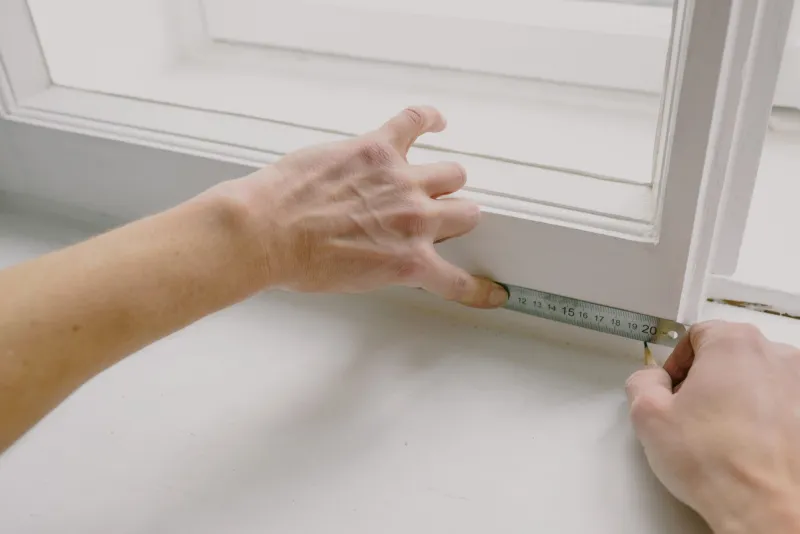
If the sink sits under a window, measure the upstand height before ordering — a deep butler sink plus a 150mm upstand can foul a sill.
The appliance stack: measure twice, vent properly
Almost every UK washer and dryer is 600mm wide and 600mm deep, but depth is where people get caught. A freestanding machine pushed against a wall needs roughly 20mm of clearance behind for hoses and ventilation, so allow 620mm of usable depth or accept a slight protrusion past the worktop.
Stacking is fine, but only with a kit made for that specific pair. A universal bracket that clamps the dryer to the washer by friction is not the same thing, and a dryer bouncing on top of a spin cycle is a noise you'll hear for years. Check the manufacturer's stacking kit part number before you buy either appliance.
Ventilation and drainage matter more than the spec sheet suggests:
- Vented dryers need a 100mm duct to outside. If you can't get one, don't buy one.
- Condenser dryers dump heat and moisture into the room and need airflow around them.
- Heat-pump dryers run cooler and cheaper but take longer, and many can be plumbed to drain condensate so you're not emptying a tank every load.
Don't box appliances in. Leave access for a service engineer to reach the back, and keep the isolation valves and the washing machine standpipe reachable without pulling the machine out. A simple removable plinth panel is worth more than a clever fitted surround.
Drying provision is the bit everyone forgets
A single wash load releases roughly two litres of water into the air. In a small, sealed utility room that moisture has to go somewhere, and the somewhere is usually your walls.
Budget for one of these before you buy anything decorative:
- A heated airer (around 300–400W) is cheap to run and folds away.
- A ceiling-mounted pulley airer uses the warm air at the top of the room and costs very little, but needs ceiling height and joists in the right place.
- A wall-mounted rack over the sink is fine for smalls, useless for bedding.
Pair whichever you choose with extraction. A 100mm inline or wall-mounted extractor with a humidity sensor and a trickle setting will do more for the room than any amount of moisture-resistant paint. If the utility is internal with no external wall, a ducted run to the nearest outside face is a job to plan before plasterboard goes up, not after.
Storage that holds real objects
Utility storage fails when it's designed for tins rather than broom handles. Useful numbers:
- Tall cupboards: 2.1m high, 350mm deep for packets and bottles, 600mm deep if you want laundry baskets to slide in.
- Ironing board slot: around 350mm wide and 1,250mm tall, ideally with a hook so it doesn't fall on your foot.
- Broom and mop bay: 300mm wide minimum, with a socket for the vacuum charger at waist height.
- Pull-out laundry bins: excellent, but check the runner load rating — wet washing is heavy.
Adjustable shelving beats fixed shelves every time, and a socket inside a tall cupboard means the hoover and the iron can live out of sight without cable spaghetti on the worktop.
Finishes that cope with steam, mud and bleach
Flooring: sheet vinyl or glue-down LVT with an R10 or R11 slip rating is the sensible choice. Avoid laminate — one leak under the washing machine and it's firewood. If you want tile, pick a textured porcelain and use an epoxy grout.
Walls: moisture-resistant paint or a full-height splashback behind the sink. A 100mm upstand is the minimum; 300mm behind the tap is better.
Worktop: compact laminate or stainless steel for a genuinely hard-working surface. Solid wood looks lovely and will need re-oiling around the sink; if you go that way, seal the sink cut-out edges properly.
Ironmongery: soft-close hinges and D-handles rather than knobs — wet hands and small knobs are a bad combination, and a 128mm bar handle is easier to grab with a laundry basket balanced on your hip.
Buy in this order
Sink and tap first, because the worktop is cut around them. Appliances and stacking kit second, because carcass heights depend on them. Extraction and drying provision third, before the ceiling closes. Everything else — shelves, hooks, bins — last, once you know what actually ends up living in there.
A utility that works is a deeply unglamorous room. Nobody will compliment it. But you'll notice it every single day, and that's the point.